25 July 2025
Family reunions and Moroccan realities
Or, How travelling with grown children is nothing like you remember
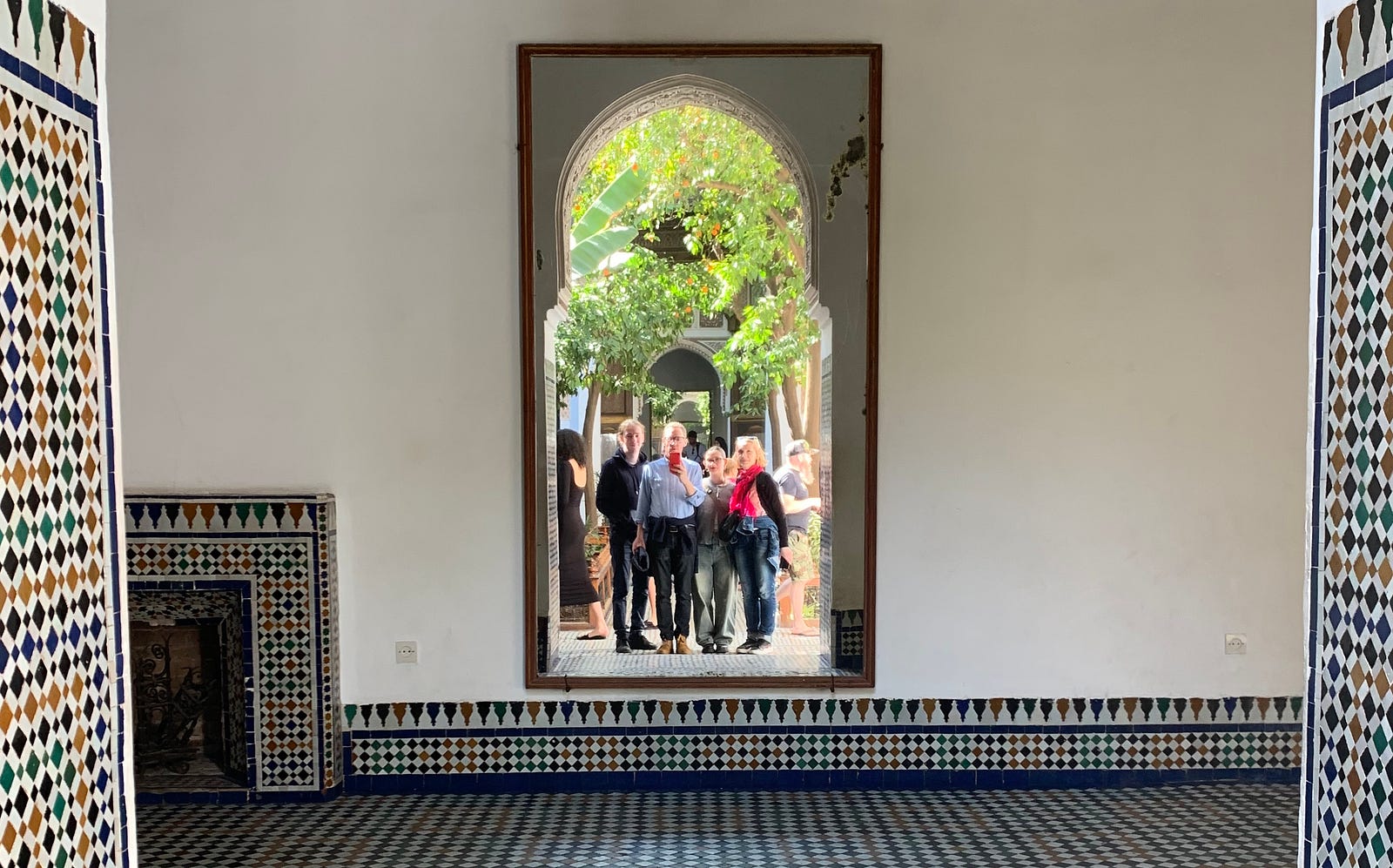
I remember being asked, many years ago, what travelling with young children is like. My answer was simple: it's not really a holiday—you're just looking after your kids in a different place.
Be that as it may, when kids decide (usually at the age of around 14 or 15) that they no longer want to go on holiday with their parents, mothers and fathers alike will not feel a sigh of relief, but one of sadness. Any memories of kids being a pain in the backside are forgotten, instantly replaced by happy memories of beach games or impromptu races on the ski slopes.
My kids are now 23 and 18. While the youngest will still come on holiday occasionally (if the destination is new and different) my eldest hasn't been away with us for years. Amelia still asks him if he wants to come—more in hope than anything else, for he always says no.
So it was with great surprise that earlier this year he agreed to join us in Morocco for our first holiday as a quartet since well before the Covid-19 pandemic. It was a joy. It was a chance to deepen bonds in entirely new ways—exploring an unfamiliar destination together, sharing meaningful conversations over local food, and creating fresh memories beyond the realm of childhood routines.
Travelling with your now-grown kids can be every bit as transformative and exciting as those early family holidays—just with a different rhythm, a lot more freedom, and the promise of discovering the world, and each other, from a fresh perspective.
—
Not that we travelled together, all arriving from different places. Amelia flew in from Bucharest, I flew from Turin (having sneaked in a few days skiing in Bardonecchia, 'on the way'). The kids came from Glasgow where our eldest studies; the youngest had been to visit him.
For this correspondent, arriving straight from the ski slopes was a shock. Morocco was unseasonably hot this February, even at the late hour I landed. The next morning, with a full day to spare before the rest of the crew arrived, I wandered the streets of Marrakech in what felt like a furnace compared to the crisp Alpine air I'd left behind just hours earlier.
The transition from skiing gear to sun hat in less than 24 hours should have been invigorating. Instead, it was mildly disorienting—rather like jet lag, but for seasons instead of time zones.
—
Whatever romantic notions you may have about Marrakech's airport are best left at the departure gate of your originating airport. Mohammed V is a monument to bureaucratic inefficiency that would make even the most jaded veterans of Romanian public administration weep with frustration.
The process is magnificently pointless. After disembarking, you join a queue for passport control. Not unreasonable, you might think. But once your passport has been stamped, you then join another queue for someone to check that your passport has indeed been stamped. Then, just when you think you're free to collect your luggage and escape into the North African sunshine, there's a third queue—this time for security to actually leave the building.
It's as if the Moroccan authorities have deliberately designed a system to test the patience of every visitor before they've even properly arrived in the country. By the time you emerge, blinking into the Marrakech heat, you've already been in the airport for the better part of two hours. At least the taxis are plentiful and reasonably priced (not the case in the city itself—see notes).
—
The transformation that comes with travelling with adult children rather than small ones becomes apparent almost immediately. Gone are the days of elaborate packing lists, constant snack requirements, and the need to plan every moment around nap times and meltdown prevention.
Instead, you find yourself with companions who can carry their own luggage, make restaurant suggestions, and—perhaps most surprisingly—offer genuine insights about the places you're visiting together.
Our eldest, now studying public and social policy, brought a political awareness to our Moroccan adventure that I hadn't expected. His observations about French colonial architecture and contemporary North African politics added layers to conversations that would have been impossible when he was seven and more interested in whether the hotel had a swimming pool.
The youngest, meanwhile, has developed into the family's unofficial photographer, approaching street scenes and architectural details with an artistic eye that constantly surprises me. It's rather wonderful to discover that your children have grown into interesting adults when you weren't looking.
—
From Marrakech, we took the train to Fes—a journey that proved to be one of the trip's unexpected highlights. Moroccan railways, it turns out, are a revelation. The train departed precisely on time, was spotlessly clean, and comfortable enough for the six-hour journey. A trolley service appeared regularly, offering decent coffee, tea, and snacks at entirely reasonable prices. The stations we passed through were equally well-maintained and efficient.
This came as something of a surprise to someone accustomed to the, shall we say, more relaxed approach to punctuality and cleanliness that characterises rail travel in certain other parts of the world (Romania's CFR, I'm looking at you). Morocco's railways put many European services to shame.
The landscape that unfolds between Marrakech and Fes is quietly spectacular—rolling hills dotted with olive groves giving way to more dramatic terrain as you head north. It's the kind of journey that makes you remember why train travel, when done properly, remains superior to flying.
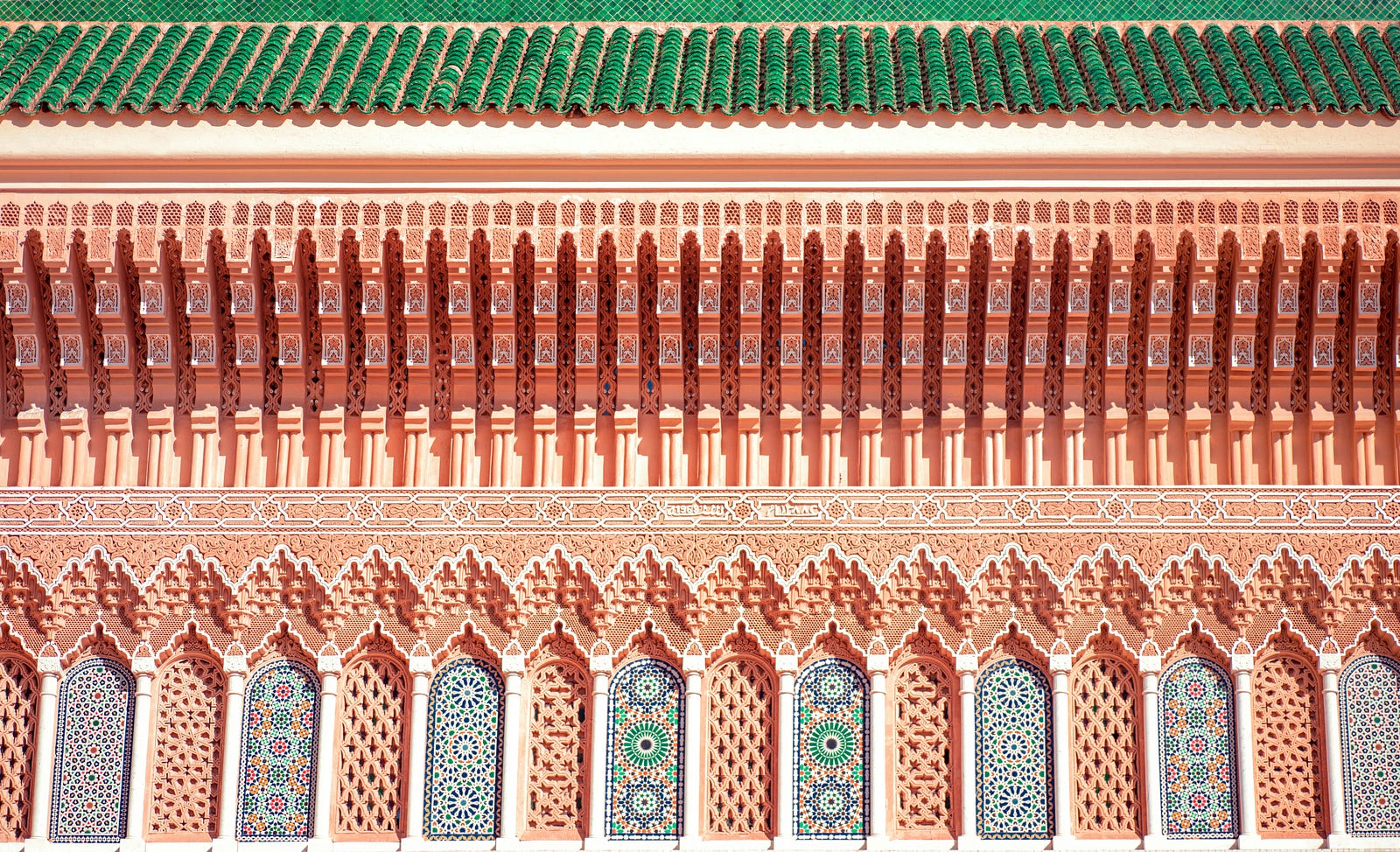
If you believe what you read online, Fes is a dangerous maze where unwary tourists are routinely mugged, scammed, or worse. The medina, according to countless travel blogs and guidebooks, is a labyrinthine death trap where locals lurk around every corner waiting to misdirect you toward waiting accomplices.
What utter nonsense.
During our three days in Fes, the only 'danger' we encountered was the risk of buying too many carpets (we resisted) or eating too much tagine (we didn't resist). The locals we met were unfailingly friendly and helpful. When one chap told us not to go down a particular alley because it was a dead end, we initially suspected the worst—we'd read the warnings, after all. We carried on regardless, only to discover that it was indeed a dead end.
Sometimes, locals are actually trying to help.
As for Fes being 'dangerous', if you think shopkeepers and locals greeting you with a friendly as-salāmu ʿalaykum every couple of steps constitutes a threat, then Fes probably isn't for you. Then again, foreign travel probably isn't for you. Leaving the house probably isn't for you.
Fes is demonstrably safer than countless other tourist destinations. You will encounter significantly more aggressive hassle in Istanbul's Grand Bazaar, more pickpockets on Barcelona's Ramblas, and more genuine menace in certain parts of Naples after dark. The worst thing that happened to us in Fes was overpaying slightly for a taxi to the station (and even that was entirely my fault for not haggling with sufficient vigour).
—
The best thing about our time in Fes—better even than the medina itself—was our accommodation. Riad Chez Khadija sits in the heart of the old city, a 16th-century house that has been lovingly restored into something approaching perfection.
You enter through an unremarkable wooden door set into the medina's ancient walls, then step into a courtyard that takes your breath away. A central fountain surrounded by intricate zellige tilework creates a sense of cool tranquility that seems impossible given the bustling streets just metres away. Orange and lemon trees provide shade, while the sound of water masks any noise from the surrounding medina.
The rooms are arranged around this central courtyard on three levels, each featuring traditional Moroccan furnishings combined with modern comforts. Thick walls keep the interiors cool even during the heat of the day, while small windows and a gorgeous roof terrace offer glimpses of the medina's rooftops and the distant Atlas Mountains.'
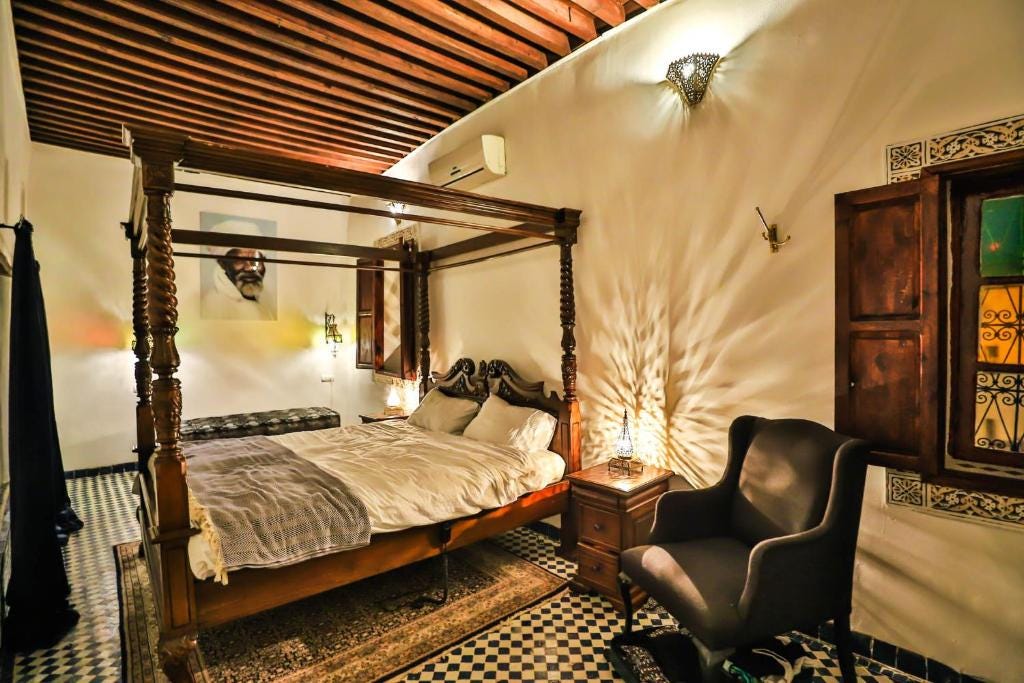
Our rooms featured carved cedar ceilings, handwoven carpets, and bathrooms tiled in the traditional Moroccan style. The attention to detail was extraordinary—from the brass fittings that had been polished to a mirror finish to the soft cotton linens that made sleeping in the North African heat entirely pleasant.
But it was the breakfast that elevated our stay from merely excellent to unforgettable. Each morning, our host would appear with a feast spread across several tagines and platters: fresh bread still warm from the local bakery, homemade preserves, local honey, olives, cheese, and perfectly ripe fruit. The coffee was strong and aromatic, the orange juice freshly squeezed.
More than the food itself was the manner in which it was served—with genuine warmth and pride. Our host would sit with us briefly each morning, asking about our plans for the day and offering suggestions for hidden corners of the medina that tourists rarely discover. It was hospitality in its purest form, the kind that turns a good trip into a memorable one.
—
Travelling with adult children also means navigating different energy levels and interests in ways that would have been unthinkable during the bucket-and-spade years. Our youngest could happily spend hours exploring the intricate alleyways of the medina, photographing doorways and architectural details. Our eldest was more drawn to the economic and political realities of contemporary Morocco, striking up conversations about everything from tourism's impact to unemployment among young graduates.
Amelia and I found ourselves playing the role of facilitators rather than dictators, suggesting possibilities rather than imposing itineraries. It's a more relaxed approach to family travel, one that acknowledges that everyone is capable of making their own decisions and that the best experiences often come from spontaneous discoveries rather than rigid planning.
The downside, of course, is that you can no longer simply decree that everyone will spend the afternoon at the local swimming pool because you fancy a quiet read. Democracy in travel planning, it turns out, is considerably more complex than benevolent dictatorship.
—
Back in Marrakech for our final days, we based ourselves in a modern apartment on Rue Halab, in the newer Gueliz district. While it lacked the atmospheric charm of our Fes riad, it had the considerable advantage of being within walking distance of Beldi Fusion Kitchen, quite possibly the most magnificent restaurant in all of Morocco.
Beldi serves a sophisticated take on Moroccan cuisine that manages to be both innovative and respectful of tradition. The menu changes regularly, but during our visit featured dishes such as lamb shoulder with quince and almonds, sea bass with preserved lemons, and a chocolate and rose dessert that bordered on the divine. Even the breakfast menu is a work of art.
The service was impeccable—attentive without being intrusive, knowledgeable without being pretentious. It's the kind of place that makes you understand why people travel—not just to see sights or take photographs, but to experience something genuinely special.
Our (many) family meals there became the trip's highlight, conversations flowing as freely as the freshly-squeezed orange juice, ranging from politics to travel plans to memories of previous family holidays. It struck me that this is what travelling with adult children offers that family holidays with small children never could—the opportunity for genuine conversation and shared discovery.
—
The medina in Marrakech is, predictably, far more touristy than its counterpart in Fes. Snake charmers pose for photographs then demand money, spice sellers offer increasingly elaborate sales pitches, and the famous Jemaa el-Fnaa square feels like a stage set designed for Instagram rather than authentic Moroccan life.
That said, dismissing it entirely would be unfair. Yes, it's commercialised, but it's also genuinely spectacular. The evening transformation of the square from relatively quiet daytime market to chaotic nighttime food court and entertainment venue is worth experiencing at least once. The array of food stalls offers some genuinely excellent eating (though choosing between them can be overwhelming), while the surrounding souks, despite their obvious focus on separating tourists from their money, contain some genuinely beautiful crafts.
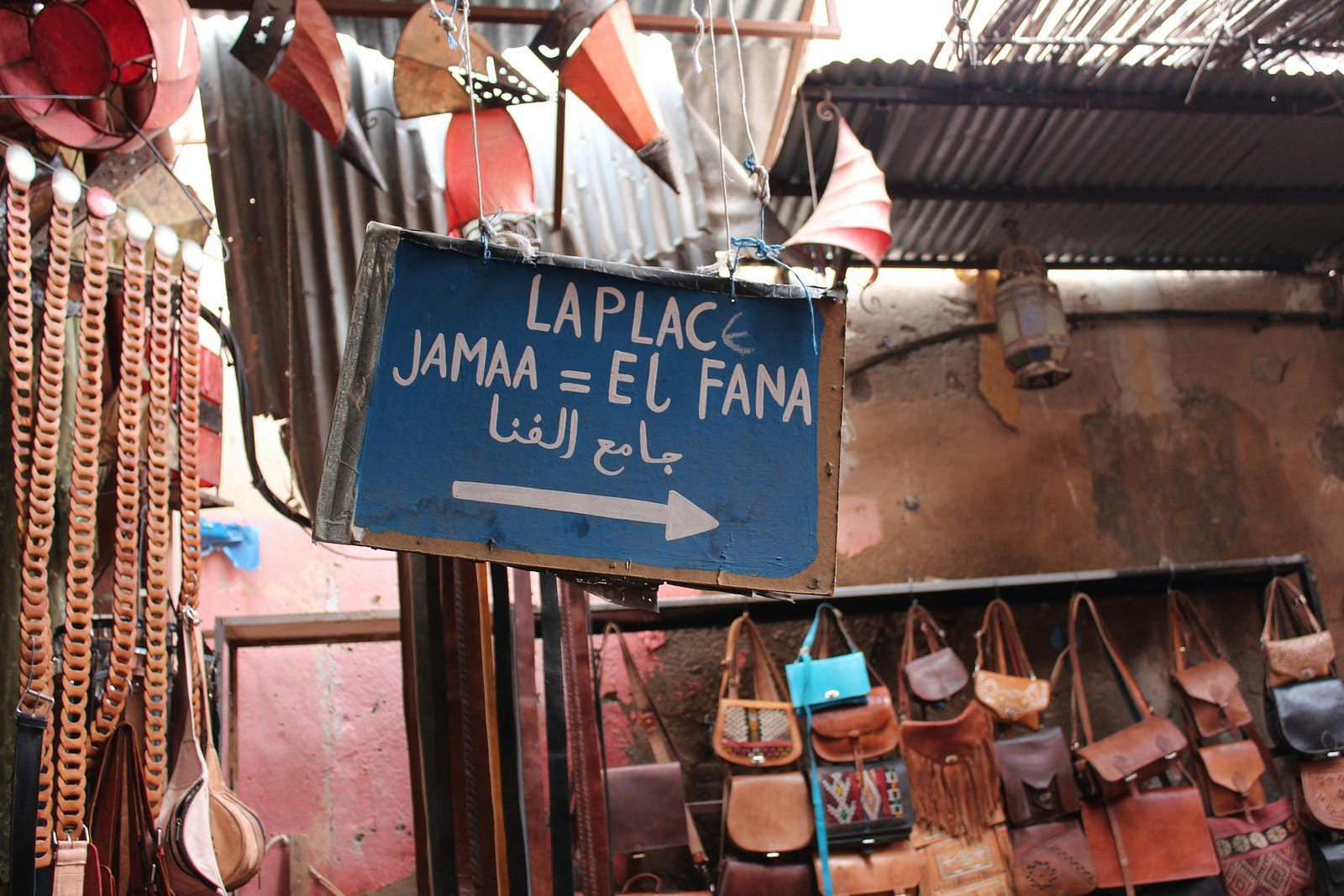
The key, as with most tourist attractions anywhere in the world, is managing expectations. This isn't authentic Moroccan life—it's Morocco's tourism industry on full display. Approached with that understanding, it can be quite enjoyable. Approached with romantic notions about unchanged centuries-old traditions, it will disappoint.
—
Our adult children proved remarkably adept at navigating Marrakech's more aggressive sales tactics, something that surprised us given their relative inexperience with such things. Perhaps it's a generational confidence, or maybe they'd simply absorbed more from previous family travels than we'd realised. Either way, watching them handle persistent leather handbag sellers with polite firmness was oddly gratifying.
It also highlighted another advantage of travelling with adult children—you're no longer solely responsible for every interaction or decision. When our youngest wanted to explore a particular section of the medina and our eldest preferred to find a café with WiFi, we could split up temporarily without the logistical nightmare that such decisions would have created fifteen years ago.
—
No visit to Marrakech, it seems, is complete without a trip to the Sahara Desert. At least that's what the hundreds of tour operators lining the streets around Jemaa el-Fnaa would have you believe. Every second shop window displays photographs of camels silhouetted against spectacular sunsets, promising authentic Berber experiences and unforgettable nights under the stars.
The reality, as with so many tourist experiences, is rather more prosaic.
Despite the bewildering array of companies offering desert tours—each claiming to offer something unique, authentic, or superior to their competitors—they are all essentially selling the same product: a bus ride to the same patch of sand outside Marrakech (which is, technically speaking, not even the Sahara proper, but the Agafay sand dunes), a brief camel trek, a traditional meal of variable quality, and an evening's entertainment around a campfire.
The camel ride, it should be said, is exactly as uncomfortable as you'd expect. These ships of the desert are magnificent creatures, but they are not built for passenger comfort. Twenty minutes bouncing around on a saddle that appears to have been designed by someone with a grudge against the human spine is quite enough for most people.
The traditional Berber meal served at the desert camp was, to put it diplomatically, forgettable. Tagine that had clearly been prepared hours earlier and reheated for the tourists, accompanied by bread that had seen better days and mint tea that was more sugar than anything else. It's the kind of meal that makes you appreciate just how good authentic Moroccan cuisine can be when it's prepared with care rather than mass-produced for coach parties.
The evening's entertainment, however, was genuinely enjoyable. The traditional music and fire show around the campfire had a theatrical energy that even the most cynical observer (yours truly) couldn't help but appreciate. Yes, it's performed nightly for different groups of tourists, but the musicians clearly took pride in their craft, and the fire dancing was genuinely impressive. Sometimes tourist theatre, when done well, is perfectly acceptable tourist theatre.
But it's the sunset that makes the entire exercise worthwhile. Watching the sun disappear behind the dunes, painting the sky in shades of orange and pink that would look artificial in a photograph, is genuinely spectacular. For perhaps twenty minutes, as the temperature begins to drop and the light fades, you understand why people have been crossing deserts for millennia. It's one of those moments that justifies the discomfort, the expense, and even the forgettable tagine.
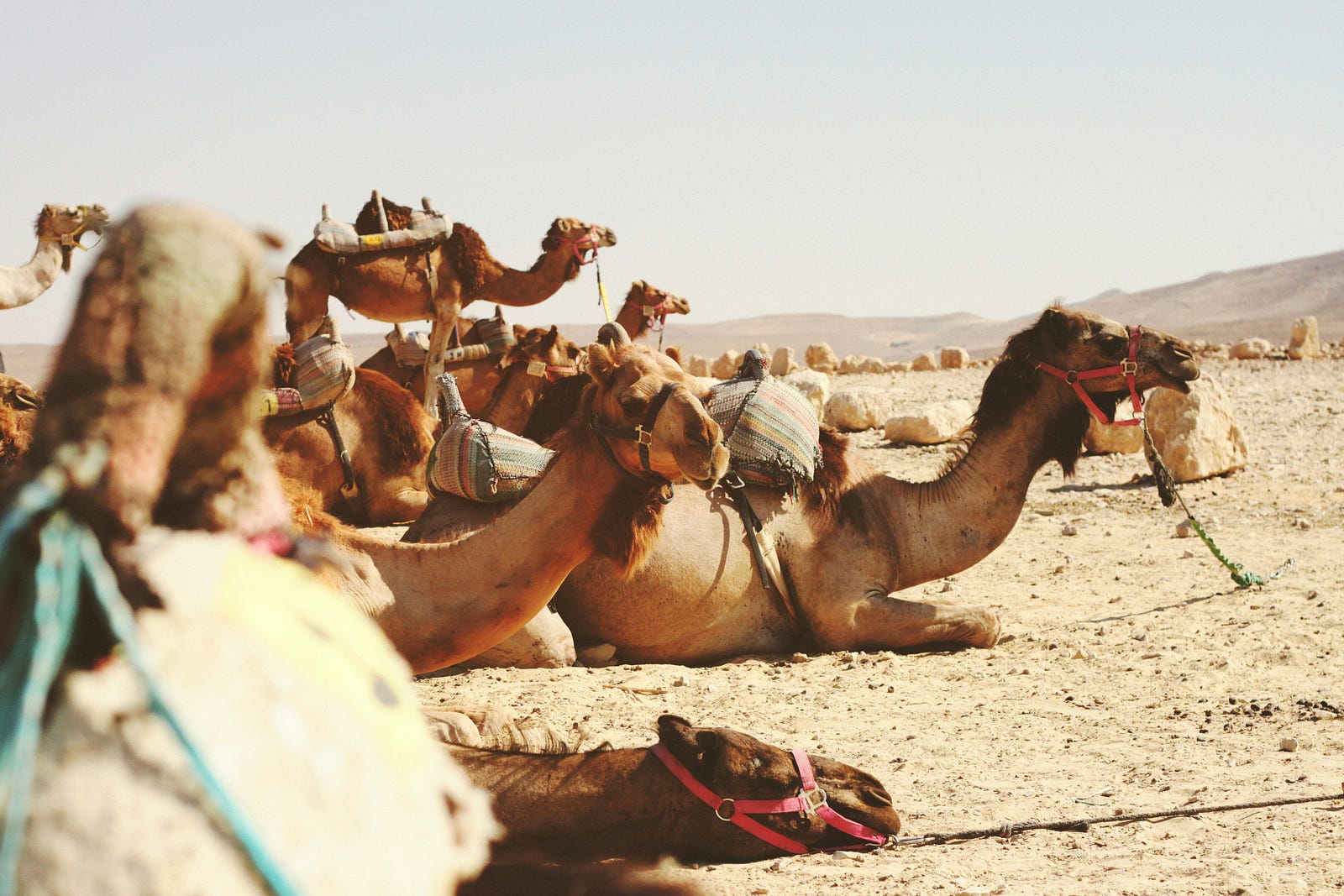
The tour operators will enthusiastically try to sell you on an overnight desert experience, complete with sleeping under the stars in traditional Berber tents. In principle, this sounds rather romantic. In practice, in February at least, it's uncomfortably cold. The desert may be scorching during the day, but nighttime temperatures can drop dramatically. Unless you're particularly hardy (or have packed serious camping gear), the day trip option is perfectly adequate.
Our adult children, predictably, were rather more enthusiastic about the camel riding than their parents, though even they admitted that one circuit of the dunes was quite sufficient (just as well, as that’s all you will get). The eldest made the observation that the entire experience felt rather like a theme park version of desert life—not inauthentic exactly, but certainly packaged for tourist consumption. It was a perceptive comment that rather summed up much of Morocco's tourism industry.
—
Notes
We flew to Marrakech from various European cities with different airlines—Bucharest (Wizz Air), Turin (Ryanair), Glasgow (easyJet).
The train from Marrakech to Fes costs around 220 dirhams (approximately €18) for second class and runs several times daily. First class is available for roughly double the price but hardly necessary given the high standard of the regular service. Make sure you reserve tickets in advance. The only (official) place to do so is the Moroccan Railways (ONCF) website (beware imitations). It will work—eventually.
Riad Chez Khadija in Fes can be booked through the usual platforms and represents exceptional value. The location in the medina means you'll need to walk the final stretch (cars can't access the old city), but the riad can arrange to meet you at the medina's edge.
Beldi Fusion Kitchen in Marrakech requires reservations, particularly if you want to sit on the terrace. It's not cheap by Moroccan standards but represents excellent value compared to equivalent restaurants in European capitals.
February proved an excellent time to visit Morocco—warm enough for comfortable sightseeing but not the overwhelming heat of summer. Pack layers, as temperatures can vary significantly between day and night.
Uber and Bolt are non-existent in Morocco, and in Marrakech and Fes there is no local alternative either. As such, you will need to deal with taxi drivers who will simply refuse to switch on their metres, instead demanding high fees for even short journeys. We walked (often far longer than we would have wished) in order to avoid them
Marrakech airport's triple-queue system remains as pointlessly inefficient as ever. Allow extra time (especially when departing—you can’t check-in online) and pack patience.