23 September 2026
Soho, sanitised
Or, Old man shouts at cloud
Dog whistles are increasingly common in the UK, not least in London. Comments about the city ‘not being what it was’ or ‘looking very different these days’ may appear harmless at first but rarely survive more than a moment’s analysis: they are usually racist statements made by people who haven’t quite taken the leap to full on talk of ‘deport them all’ (although there are plenty who have).
I left London, where I was born and grew up, almost three decades ago. And yes, it has changed in that time, largely for the better. Public transport is unquestionably better (the Elizabeth Line has been a game changer for millions), crime levels have fallen considerably (so much so that violent crime is now at record lows), while the city’s economic output (measured as Gross Value Added/GDP) has grown from roughly £150 billion in the mid-1990s to over £618 billion last year, around 22.3% of the UK’s GDP. London, by just about any measure, is an incredibly successful city.
Much of that growth and success has been provided by immigrants—more than 40% of the city’s population was not born in the UK. An even higher percentage, around 46% of Londoners, are from Black and minority ethnic backgrounds. This, ultimately, is what the dog whistlers dislike. That they are better off than at any time in history is, for them, irrelevant, if the benefits of London life have to be shared with ‘others’ (even if those ‘others’ are in large part responsible for the city’s success).
--
That once harmless phrases have been so rudely hijacked by England’s racist far-right is a deep shame, not least for an observational correspondent such as myself (who might not have lived in London for three decades but who visits regularly and still has family and friends in the city). There are indeed bits of London that have become unrecognisable from the city I grew up in, and from time to time I’d like to say so without being thought of as a Reform voter. Soho is probably the best example of this change—for the worse.
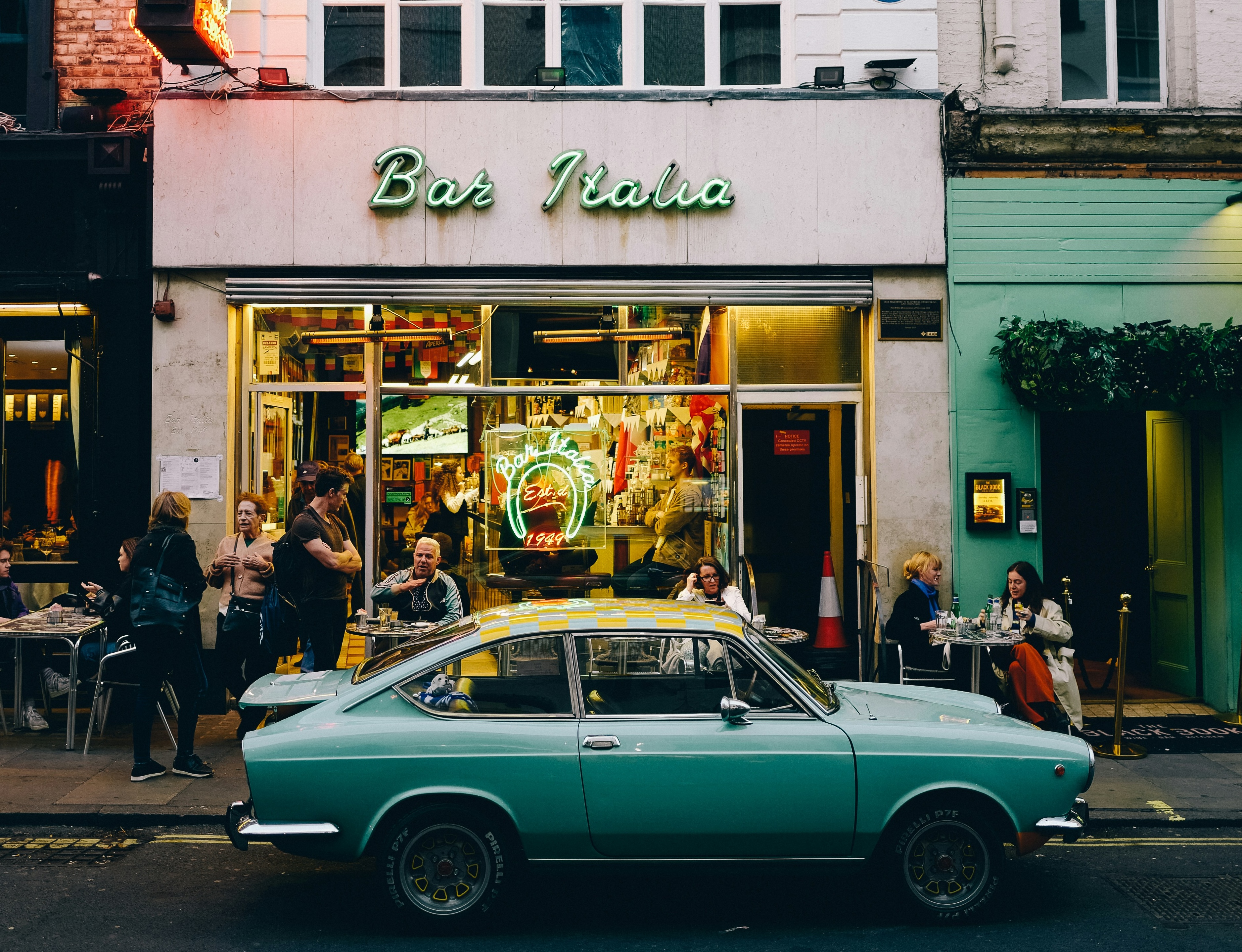
The Soho of my youth was seedy, edgy, chaotic, and very real. Today’s Soho (I spent some time in the area this week), by contrast feels much like a theme park, less a living part of London than a tourist attraction. Start with Berwick Street market, for 200 years a genuine daily market where costermongers sold fruit and vegetables, flowers and plants, pots and pans, and all sorts of goods of highly questionable provenance (not that anybody ever asked any questions). Today? It’s mainly street food, of the overpriced, poncey type, geared towards the tourists who think they’re getting an authentic London experience. (Lower Marsh, close to Waterloo station, where my father had a fruit and vegetable stall for much of the 1970s and 1980s, and his parents before him, has gone the same sad way). At least it’s still there, however, no matter how much of a parody of its former self it might be. Much of Soho has gone for good. Groove Records on Greek Street, the only place in London that sold imported electro 12” vinyl in the 1980s, went before I left. It’s a vape shop these days. The Gay Hussar, a legendary Hungarian restaurant that hosted politicians (mainly of the left) for decades is a more recent casualty of the rising rents brought about by gentrification. The Stock Pot, which sold good, cheap food, has gone. (Try finding good, cheap food in Soho today. You can’t). Amalfi, a fantastic Italian restaurant where I would invariably take first dates, has gone. Old Compton Street, London’s Stonewall, is now just another street. Bar Italia, where in pre-Sky TV days football fans would come to watch European football, is still there, but it’s full of tourists and trendy types and living off its name, not what it is today. The Coach and Horses, haunt of hacks, is still (thankfully) as grimy as ever, a last standout. For how much longer remains to be seen.
--
I am well aware that this might all read like a bit of a whinge, a man very much on the wrong side of 50 lamenting his lost youth. That may be so, but two things can be true at once. Soho is not what it once was. It’s clean, neat, tidy, safe, and successful. It’s London in microcosm.
What the dog whistlers of course can’t quite grasp is that the Soho I grew up in was built by foreigners. Huguenots, Italians, Greeks, Maltese, Hungarians, Chinese. Half the costermongers on Berwick Street had surnames their parents or even grandparents brought with them from somewhere else. Soho was never 'what it was' in the sense they mean, because it was always, from the very beginning, the most un-English bit of England. That was its charm, and that was why we loved it.
What killed Soho wasn't immigration, but money. Rents, landlords, property funds. The people who could barely break even on a Hungarian restaurant or sold moody designer gear have been chased away and/or priced out, and not by anyone arriving on a small boat. Indeed, today's Soho (clean, safe, and deprived of anything remotely edgy or unpredictable) is exactly the kind of place the 'not what it was' crowd claim to want. They are welcome to it. I prefer the old Soho.