4 September 2025
Rails to integration
Or, Why the EU's DiscoverEU programme delivers exceptional value
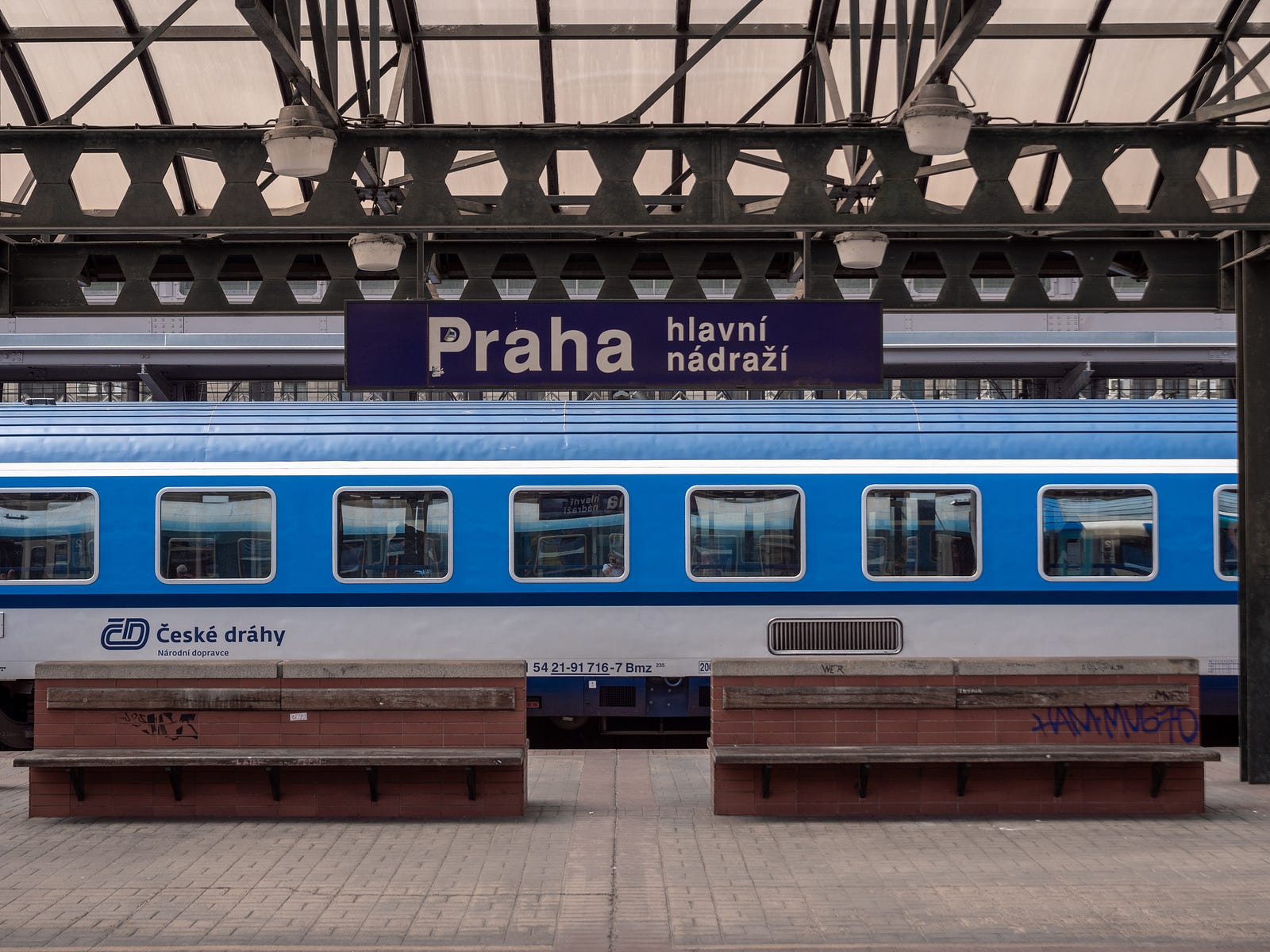
When administrators in Brussels spend taxpayers' money, the results are not always worth writing about.
The European Union has frittered away billions on agricultural subsidies that distort markets, regional development funds that end up in corrupt pockets, and grandiose infrastructure projects that often serve political vanity more than public need.
Against this backdrop, DiscoverEU stands out as a rare example of EU spending that achieves precisely what it promises—and does so with remarkable efficiency.
The programme, which distributes roughly 35,000 free Interrail passes annually to 18-year-old Europeans, costs approximately €30 million per year. To put this in perspective, the EU spends more on agricultural subsidies in a single day. Yet DiscoverEU's impact on European integration may prove far more enduring than any amount of support for French wheat farmers or Spanish olive groves.
Consider the case of two siblings (my children) who received passes in 2022 and 2025 respectively. Their experience illustrates both the programme's mechanics and its broader significance for European unity.
—
Applications are, fundamentally, a lottery, combining democratic accessibility with administrative efficiency. Applicants must answer basic questions about European geography and politics, plus a tiebreaker question that typically requires educated guesswork (previous questions include: How many applicants will travel during July?). This simple quiz filters over 130,000 annual applicants down to the lucky 35,000 without creating the bureaucratic complexity that plagues other EU programmes.
The beauty of this system lies in its egalitarian nature. Unlike university exchange programmes that favour the academically gifted, or gap-year travel that rewards the financially privileged, DiscoverEU distributes opportunities based largely on luck.
This randomness ensures that working-class teenagers from peripheral regions enjoy the same chances as their metropolitan peers—a democratic approach to European integration that would have warmed Jean Monnet's federalist heart.
—
My children's journey this August—Amsterdam to Tallinn via Berlin, Prague, Gdansk, Vilnius, and Riga—demonstrates how DiscoverEU leverages decades of investment in rail infrastructure. Their route would have been all but impossible 20 years ago, not least the ambitious Baltic leg of their journey which has become feasible only through recent coordination between Lithuania's LTG Link, Latvia's Vivi, and Estonia's Elron, which have synchronised schedules to enable smooth connections between capitals.
This infrastructure represents more than mere transport convenience. Every high-speed line and cross-border connection diminishes the psychological distance between European nations. When teenagers can board a early morning train in Gdansk and find themselves drinking (admittedly terrible) Guinness in Vilnius that evening, Europe begins to feel less like a collection of foreign countries and more like an integrated space.
—
My children’s accommodation choices—cheap Airbnbs and hostels in each city (as well as the generosity of an American-Czech friend in Prague)—reveal another layer of DiscoverEU's effectiveness. Their Berlin base, the Generator hostel at Alexanderplatz, exemplifies the new European youth travel infrastructure: part accommodation, part cultural centre, part networking hub.
Such establishments have proliferated across Europe precisely because of programmes like DiscoverEU, creating an ecosystem that supports budget travel whilst fostering international friendships.
The cultural dimension proves equally significant. The siblings' activities—paddle boarding in Amsterdam's Entrepothaven, rain-soaked walks on Jurmala beach, sampling Prague's legendary beer—represent the sort of experiential learning that no classroom can provide. When young Europeans discover that Czech beer really is superior, that Baltic beaches exist, and that Berlin's clubs (M-Bia rather than the notorious Berghain, in their case) welcome all comers, they absorb lessons about European diversity that textbooks cannot teach.
These experiences matter because they combat the nationalism that feeds on ignorance. It becomes considerably harder to demonise Germans, Czechs, or Lithuanians (not that my children ever would!) after spending pleasant evenings in their company. The programme thus serves as an antidote to the parochialism that populist politicians exploit.
—
From a purely economic perspective, DiscoverEU represents exceptional value for money with the returns, whilst difficult to quantify precisely, appearing to be substantial.
Research suggests that participants in European exchange programmes develop stronger European identities, more international career ambitions, and greater linguistic capabilities. They are more likely to work abroad, study in other European countries, and maintain cross-border friendships. For a continent facing demographic decline and skills shortages, this enhanced labour mobility represents a significant economic asset.
The tourism multiplier effect provides additional benefits. Though my children’s route was fairly mainstream, many DiscoverEU participants visit cities and regions that might not feature on conventional tourist itineraries, distributing economic benefits more widely. The emphasis on rail travel, meanwhile, supports European climate objectives whilst subsidising the continent's railway infrastructure.
Consider the Baltic dimension of their journey. Two decades ago, Western European teenagers would have been unlikely to consider Tallinn, Riga, or Vilnius as destinations. Today, these cities feature prominently on DiscoverEU itineraries, generating tourism revenue whilst showcasing the remarkable transformation that EU membership has enabled. The programme thus serves as both economic development tool and diplomatic asset.
—
DiscoverEU's timing (it began in 2018) proves particularly astute. The programme targets young Europeans who have grown up with the EU as a permanent fixture rather than a political experiment. For them, freedom of movement represents a basic right rather than a hard-won achievement. Their casual multilingualism and cultural adaptability suggest that European integration has progressed further at generational level than political discourse acknowledges.
This demographic advantage becomes apparent in participants' approach to European travel. They navigate language barriers, currency changes, and cultural differences with the sort of pragmatic adaptability that older generations might find daunting. Their willingness to sleep in hostels, eat cheap local food, and engage with strangers reflects a confidence about European mobility that bodes well for the continent's future integration.
The programme also addresses one of European integration's persistent weaknesses: the perception that EU benefits accrue primarily to educated elites. By making continental travel accessible to all 18-year-olds regardless of background, DiscoverEU ensures that European experiences extend beyond university exchange programmes and gap-year adventures.
—
Nevertheless, my children’s journey also highlighted remaining gaps in European integration. Their route required multiple train changes and careful coordination of schedules—a reminder that European rail networks remain essentially national systems with international connections rather than a truly integrated network.
Here too, however, DiscoverEU serves a valuable purpose. The programme creates demand for improved rail connections and better coordination between national operators. When thousands of young Europeans attempt complex multi-country journeys, infrastructure deficiencies become apparent. The forthcoming Rail Baltica project, which (should it ever be completed) will create high-speed rail connections across the Baltic states, responds partly to demand generated by programmes like DiscoverEU.
The reservation system, whilst occasionally frustrating, provides an education in European diversity. The fact that seat reservations cost a few euros on most services but climb steeply in some countries reflects different national approaches to rail pricing. For young travellers, navigating these systems provides practical lessons in European integration's complexity.
—
Cynics might dismiss DiscoverEU as an expensive public relations exercise—subsidised gap years for teenagers who would travel anyway. This misses the programme's deeper significance. DiscoverEU represents one of the few EU initiatives that generates genuine enthusiasm among its target demographic whilst achieving measurable policy objectives.
The programme creates European citizens in the most literal sense: young people who view the continent as their natural habitat rather than a collection of foreign countries. It stimulates economic activity, supports sustainable transport, and fosters the cultural understanding that underpins political integration. Most remarkably, it achieves these outcomes for less money than the EU typically wastes on a single misguided infrastructure project.
When my children returned home from Tallinn—via flights that cost considerably more than their continental rail passes—they brought back something invaluable: the knowledge that Europe works. Not the Europe of Brussels bureaucrats or Strasbourg politicians, but the Europe of friendly hostel staff, helpful railway conductors, and fellow travellers from dozens of countries.
This practical Europeanism, built one train journey at a time, may prove more durable than any number of treaties.
For €30 million annually, the European Union purchases something that political rhetoric cannot provide: a generation of young Europeans who regard continental diversity as an opportunity rather than a threat. In an era of rising nationalism and political polarisation, that represents remarkable value for money.
—
Notes
To start their journey in Amsterdam, my kids flew from Glasgow and Bucharest respectively. Both then flew home from Tallinn. (I am fully aware that such use of planes does somewhat defeat the climate objectives of DiscoverEU).
As the eldest had made use of his free DiscoverEU pass in 2022, we paid for his ticket this time around so that he could accompany our youngest. Passes currently cost €286 from Interrail.eu. (Although if you hurry, there is currently a 20% discount on global passes).
For more information about DiscoverEU, visit the European Youth Portal. Applications are open to all 18-year-old EU residents twice annually, with dates and other details announced on the official website.